
A vault item is an account or secret Monopam keeps for you: a user name and password, an SSH key, secret text, an OTP seed, a token. Its secret is encrypted, every saved version is kept, and every reveal or copy is audited.
|
Applies to |
Who can do this |
|---|---|
|
Monopam v2026.10 |
Creating and editing: administrators with permission to manage the vault. Revealing a field: users whose Vault Access Policy allows that field. |
Create a vault item
-
Open Vault and click Add, or click Add New Credential while assigning an account to a resource.
-
Enter a Name (1). The name is also how automation refers to the item, for example in
{{Vault.<name>.Password}}. -
Choose the Type (2) and, for a user name and password, where the account lives: Local User (an account on one resource), Domain User (an Active Directory account), Vault User (not tied to a resource) or Shared Local User (the same local account on several resources).
-
For a Local User, choose the Resource (3) the account belongs to.
-
Enter the Username (4) and Password (5), choose a Password Policy if rotation should follow one, and click Add.
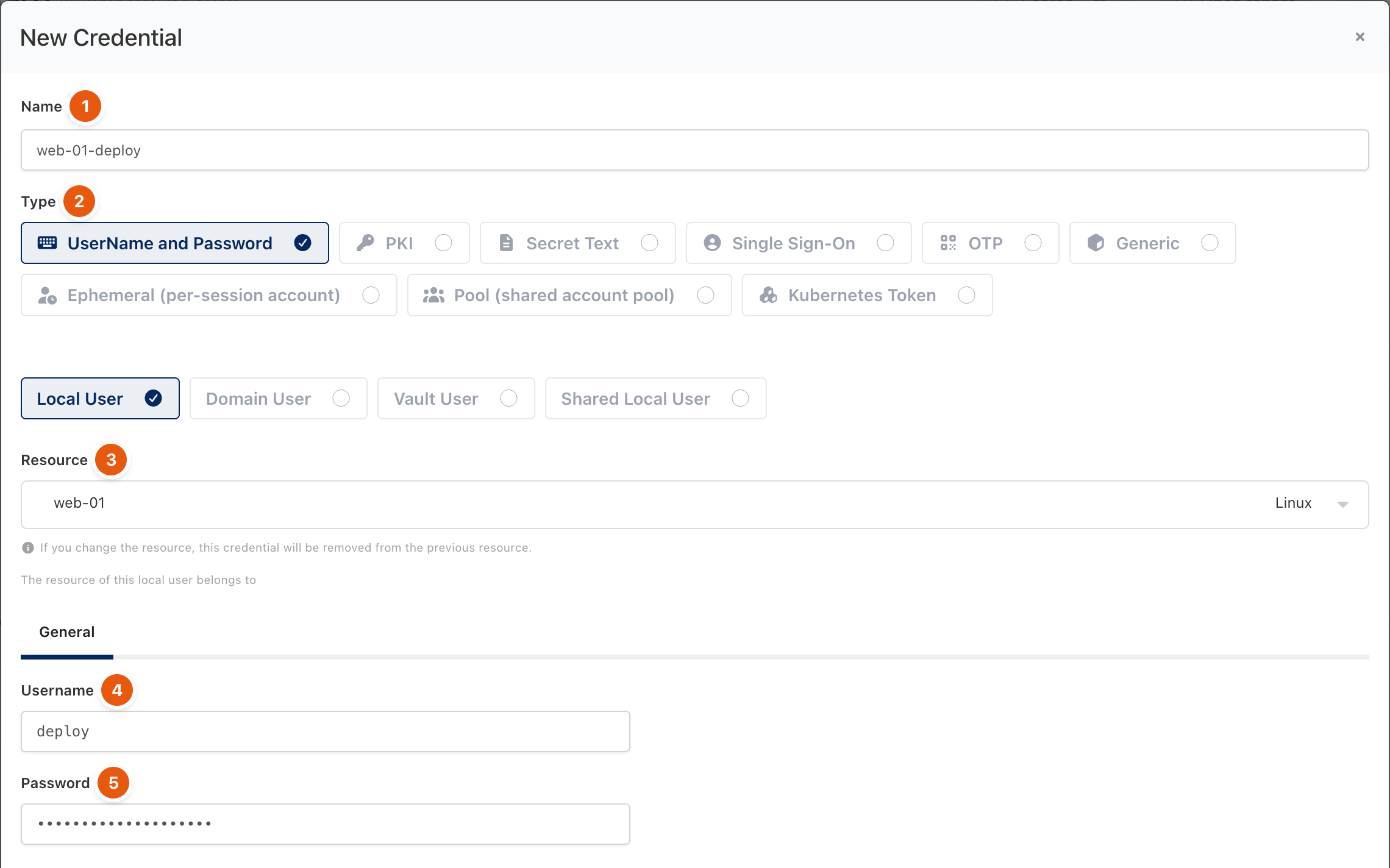
Figure 1. A new local account for web-01.
Types
|
Type |
Holds |
|---|---|
|
UserName and Password |
An account. Local, domain, vault or shared local. |
|
PKI |
A user name with a private key, public key and passphrase. Generate new key pair creates one. |
|
Secret Text |
Free text, such as an API token. |
|
Single Sign-On |
Connects each user with their own account instead of a shared one. A vault pattern can map user names to vault items. |
|
OTP |
A one-time password seed (Base32), with digits, period and algorithm. |
|
Generic |
Your own structure, defined under Generic Types. |
|
Ephemeral (per-session account) |
An account created for one session and removed afterwards. |
|
Pool (shared account pool) |
Several member accounts. One is checked out per session and released when it ends. |
|
Kubernetes Token |
A token for a Kubernetes or OpenShift cluster. |
View, reveal and copy
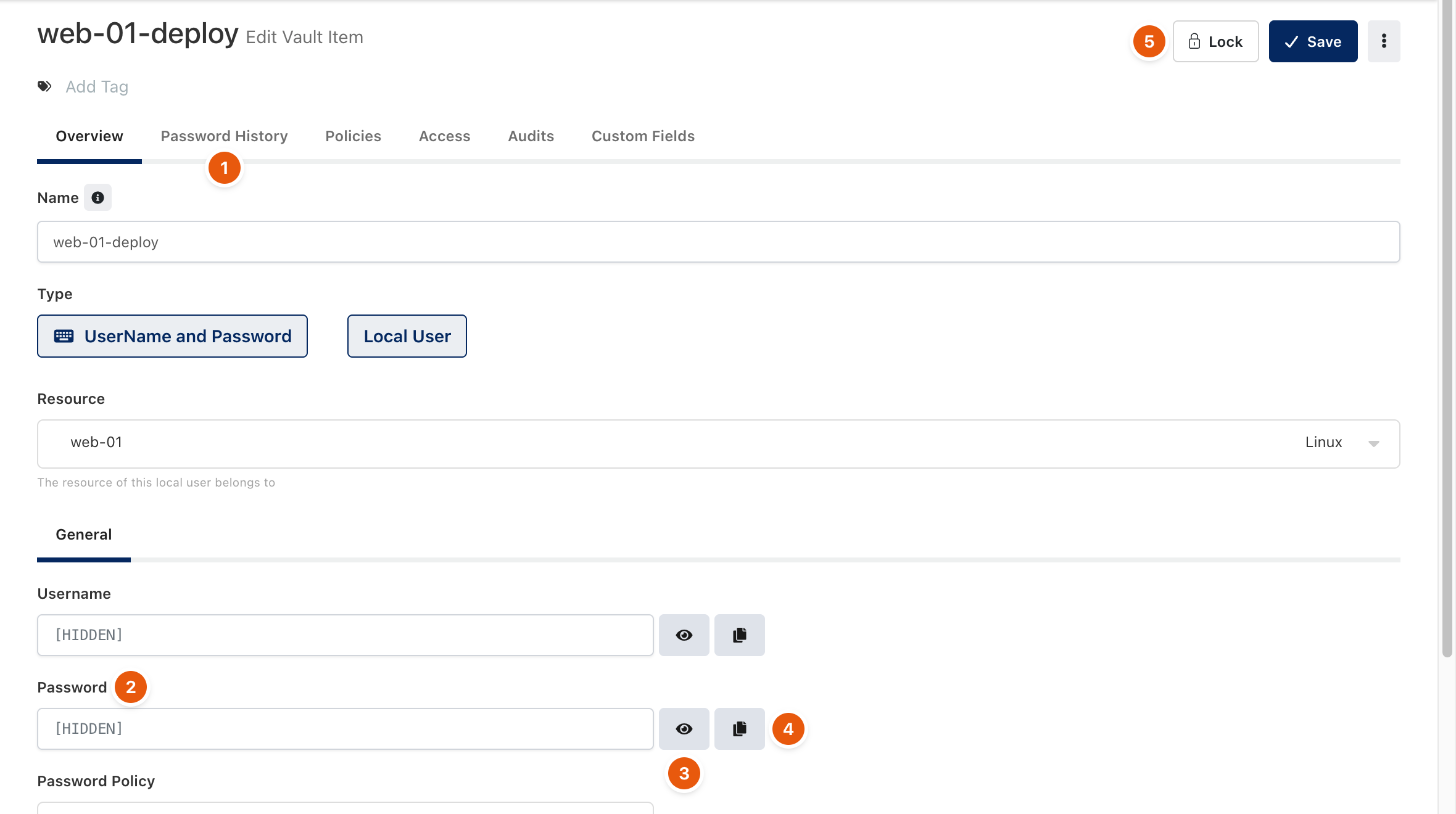
Figure 2. A saved vault item.
|
# |
Control |
What it does |
|---|---|---|
|
1 |
Password History |
Earlier versions of the secret, with who changed them and when. |
|
2 |
Field |
Secret fields show |
|
3 |
Reveal (eye) |
Shows the value for 30 seconds. Allowed only if your Vault Access Policy permits the field; otherwise you can request access. |
|
4 |
Copy |
Copies the value without showing it. |
|
5 |
Lock |
Locks the item. Nobody can reveal its data while it is locked. |
Every reveal and copy is written to the audit log as Vault Revealed / Copied. The other tabs show the Policies that apply to the item, who has Access, its Audits and Custom Fields.
Troubleshooting
|
What you see |
Why |
What to do |
|---|---|---|
|
The reveal button asks for a request instead of showing the value. |
The Vault Access Policy requires approval for this field. |
Send the request; the value can be revealed once it is approved. See Approve and revoke access. |
|
Connections fail with an authentication error after the password was changed on the server. |
The vault holds the old password. |
Update the item, or use Reconcile to push the vault's password to the server. See Password rotation and reconcile. |
Related
-
Add a resource
-
Vault Access Policy
-
Password rotation and reconcile
-
Discover privileged accounts